Fraud is global and personal
Investment scams, insurance fraud, false claims and CV padding cost businesses and families billions — and most of it happens in plain conversation.
Patent pending · U.S. applications 64/075,393 & 63/974,053
TrustCore turns an ordinary smartphone into a real-time credibility assistant. It transcribes the conversation, reads voice, face and eye signals in the cloud, and scores every topic and sub-topic — with no sensors attached to anyone.
*Bayesian model, three independent tests at 80% accuracy each, 50/50 prior. See “The math”.
Where we are
TrustCore Live already works on a smartphone: live transcription, multi-channel analysis, Bayesian fusion and a full annotated report — with all processing on the device.
Demonstration with simulated camera & speech input. The analysis engine runs live; scores are illustrative and accuracy has not yet been validated.
The problem
Investment scams, insurance fraud, false claims and CV padding cost businesses and families billions — and most of it happens in plain conversation.
A classic polygraph needs a lab, an examiner, cables on the body and hours of work. By the time a result arrives, the deal is already signed.
Each existing method — voice, face, physiology — works in isolation and carries a high rate of false positives and false negatives.
Live demo
A simulation of the TrustCore user view. Pick a scenario and press play: the transcript builds word by word, statements are scored as they are spoken, and every topic receives its own credibility rating.
Illustrative simulation of the user interface. Scores shown are example values.
How it works
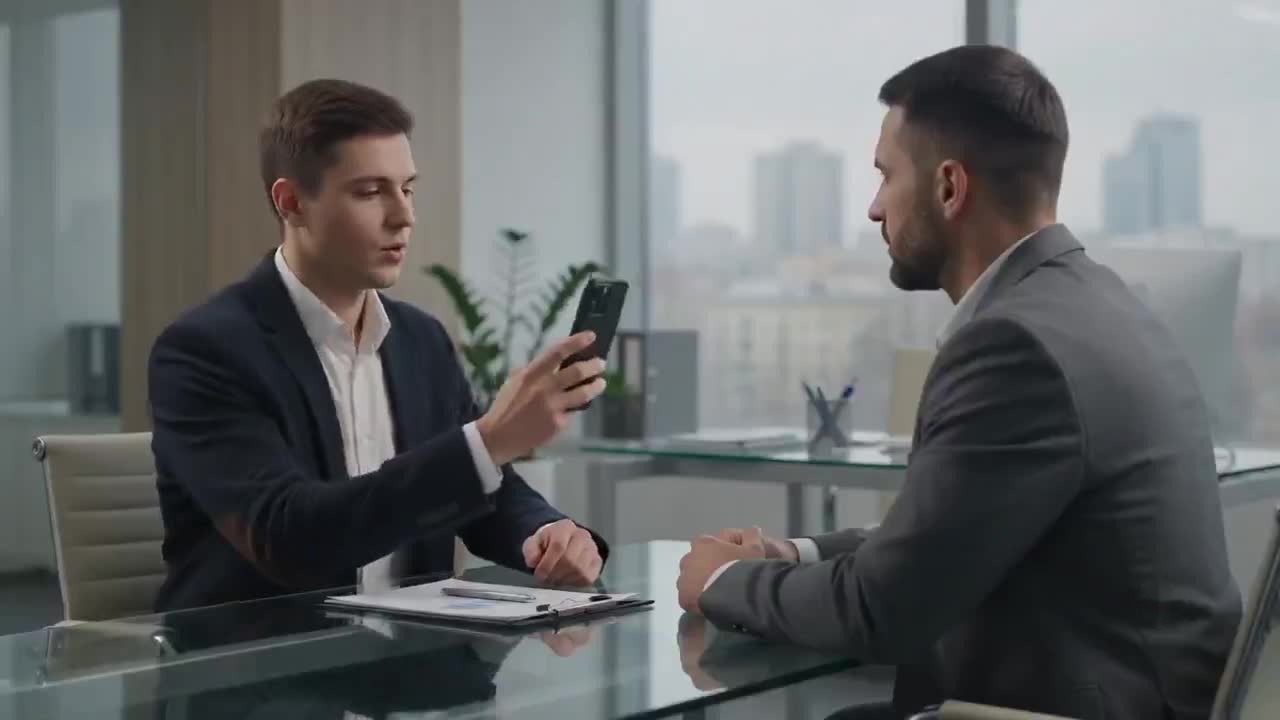
The user activates the app during a meeting or call. The phone records audio and, where enabled, video of the conversation.
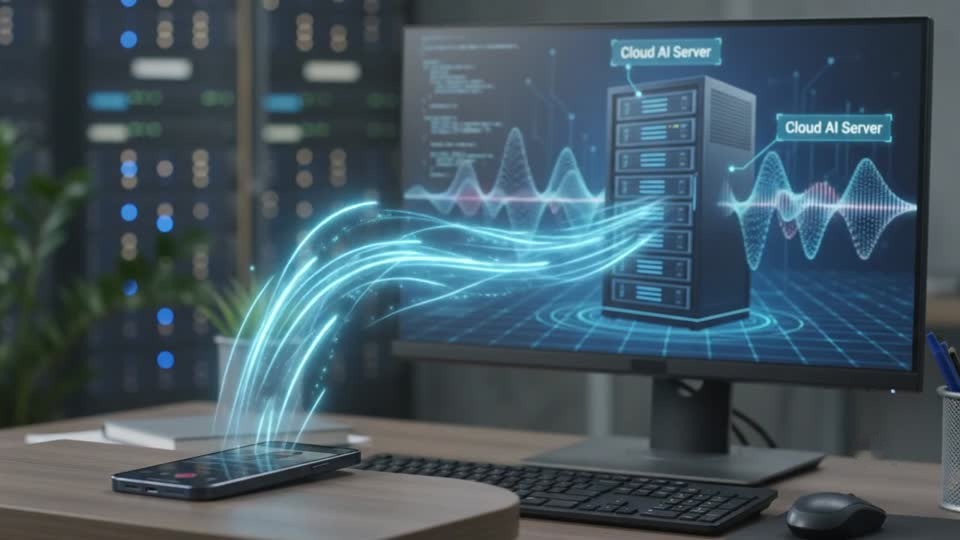
Data is streamed securely over the internet to TrustCore's cloud AI — no special hardware, nothing attached to the speaker.
Speech becomes text, and natural-language processing organises the dialogue into a tree of topics and sub-topics.
Independent engines read vocal stress, facial micro-expressions, eye behaviour and physiological cues — each time-locked to the exact words spoken.
A Bayesian inference engine combines the channels and the speaker's personal baseline into one credibility probability per statement and topic.
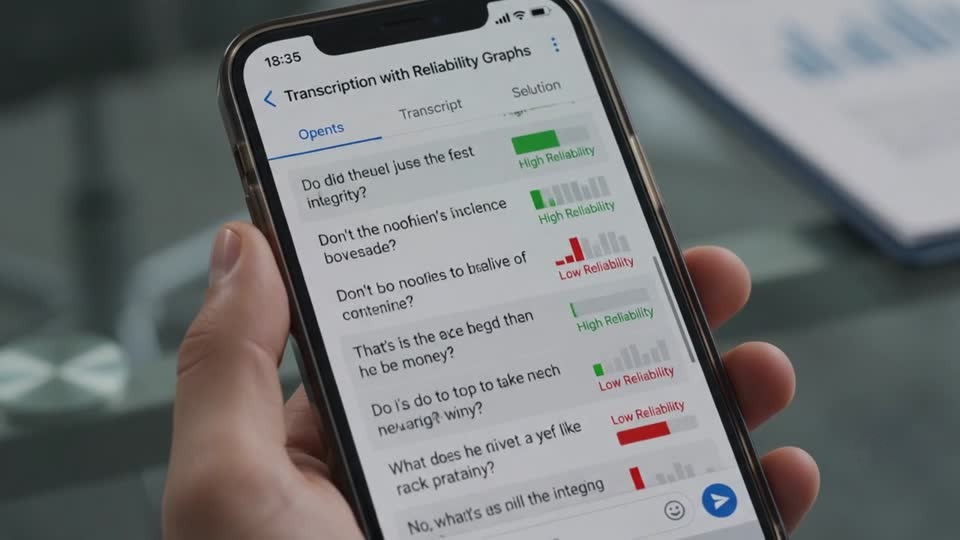
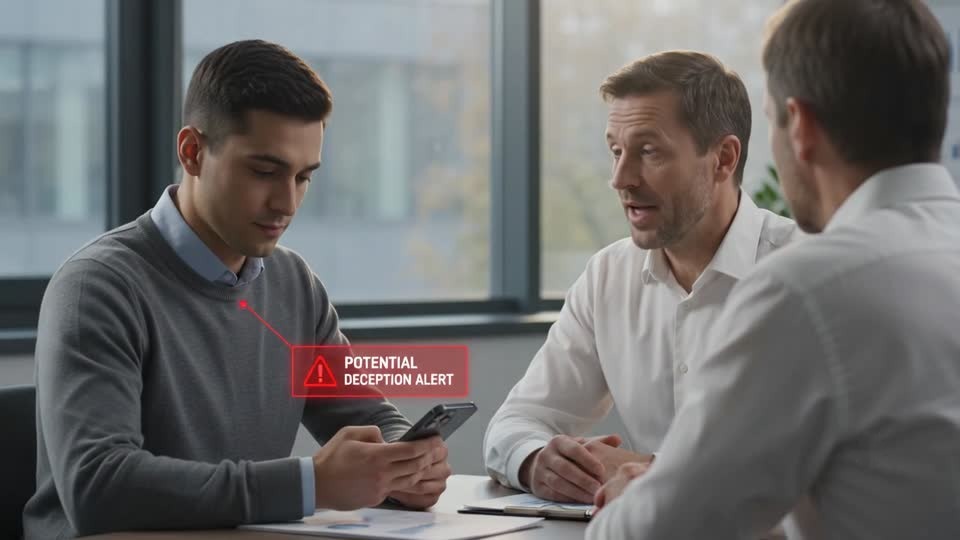
The user sees the transcript highlighted in green and red, topic scores, a rolling graph — and a discreet alert when it matters.
The math behind the certainty
TrustCore does not rely on a single “Pinocchio's nose”. It fuses several independent tests with Bayes' theorem — so the chance that all of them are wrong in the same direction drops sharply. Try it:
Instead of population averages, TrustCore first learns this speaker's own reactions — from control questions and from facts already known to be true (“truth anchors”) — and keeps recalibrating during the conversation. With a personal profile, even voice alone can move from ~80% to ~94.7%.
Certainty that the statement is true, when all tests agree
Certainty by number of fused tests
Model assumptions. Figures are mathematical illustrations, not measured field accuracy. They assume the tests are statistically independent; in practice stress signals are partly correlated, so real-world gains are smaller. TrustCore's roadmap includes Bayesian networks, likelihood ratios and Dempster–Shafer fusion to model these dependencies, and clinical-grade validation studies.
Technology
Every channel produces its own probability. The Bayesian engine decides how much to trust each one.
Micro-tremors in the 8–12 Hz band, pitch (F0), jitter, shimmer, pauses and speech rate — the involuntary footprint of stress and cognitive load.
Speech-to-text plus language understanding that builds a live topic tree and checks statements against known facts.
Sub-second muscle movements that leak suppressed emotion, analysed by computer vision and synchronised with each word.
Gaze shifts, blink rate, scan-path complexity and pupil dilation — markers of increased cognitive load.
Heart rate and blood-flow changes read from tiny colour changes in facial skin using a standard camera.
Periorbital heat signatures, and — where available — heart-rate, blood-pressure and skin-conductance sensors.
A hardware-agnostic statistical layer: existing multi-sensor polygraphs can pipe raw results into TrustCore's Bayesian engine.
User-defined signals — a silent vibration or a simulated incoming call — warn the user at the critical moment without interrupting the meeting.
Intellectual property
The claims cover the system architecture, the per-topic method, contactless visual analysis, personal Bayesian calibration and the stand-alone statistical API — with an international priority date established.
Who it's for
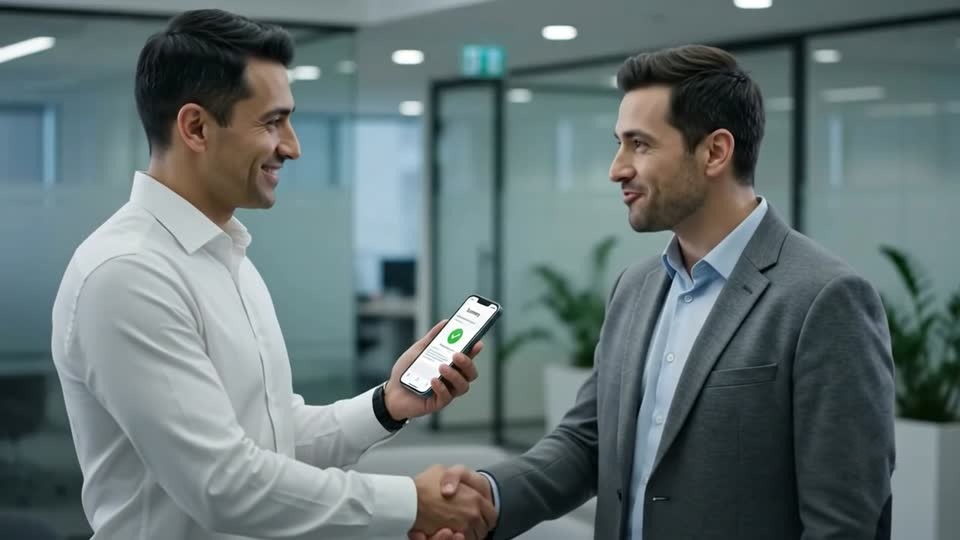
Claims verification, fraud prevention and underwriting interviews.
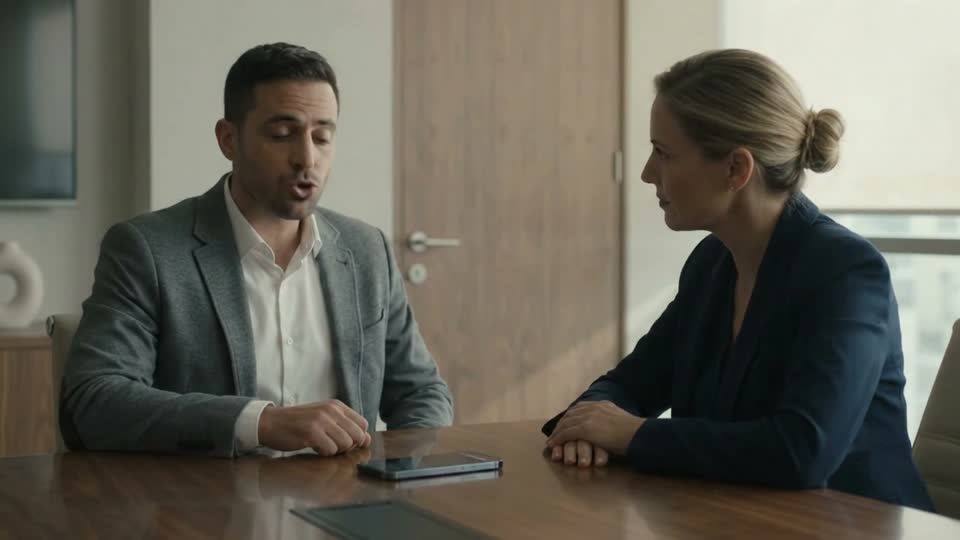
Investment offers, lending, negotiations and partner due diligence.
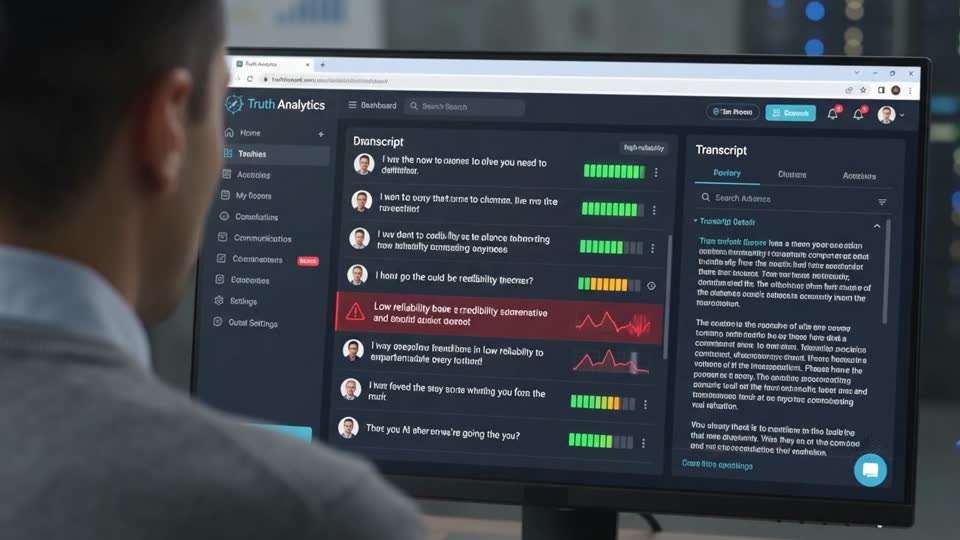
Candidate interviews, internal investigations and integrity screening.
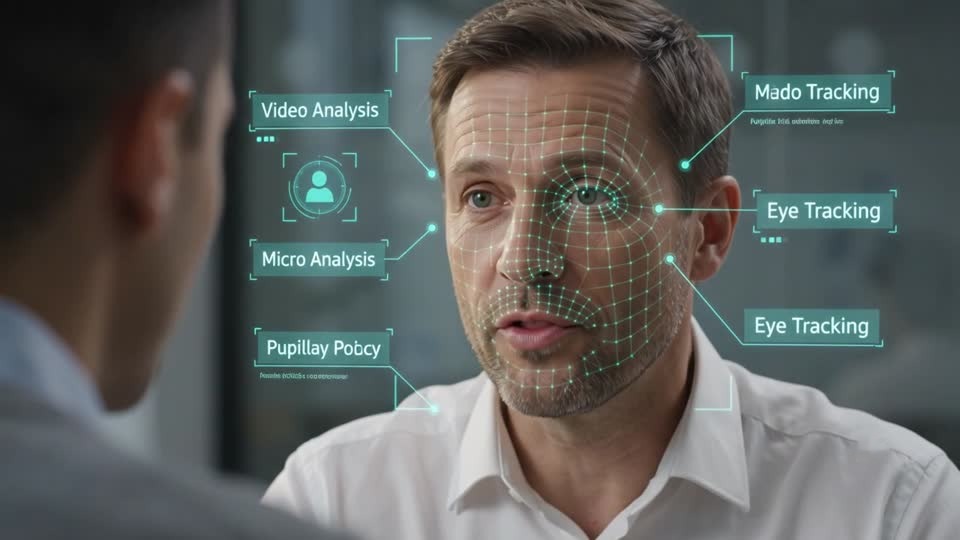
Witness preparation, pre-trial screening and civil-litigation support.
Security clearances, border and intelligence interviews, law enforcement.
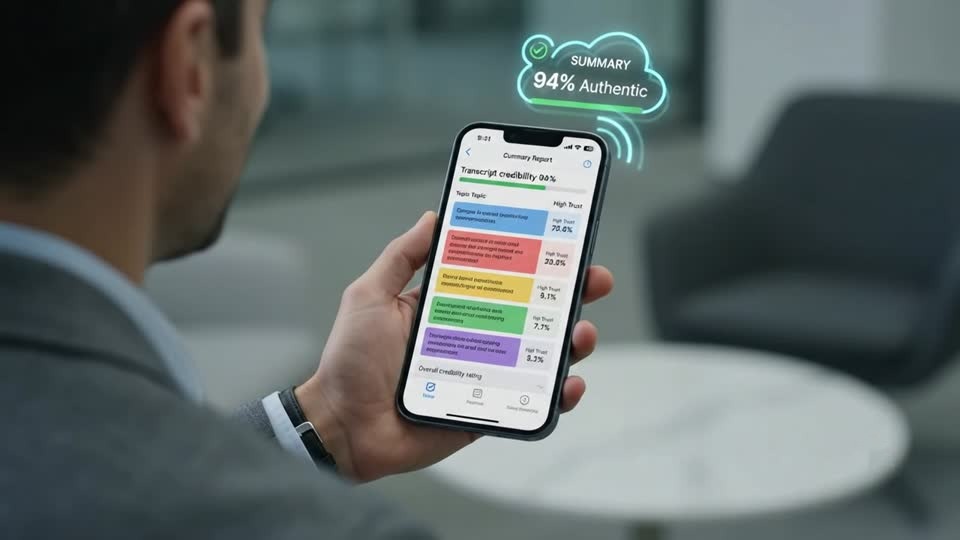
Second-hand purchases, contractors, online dating, scam calls — a second opinion in your pocket.
TrustCore sits at the intersection of legal-tech, security-tech, HR-tech and insur-tech — and opens a new consumer category: credibility checking for everyday conversations.
The pitch
The venture, the technology and the opportunity — as presented to investors.
Business model
A traditional examination costs hundreds to thousands of dollars and takes hours. TrustCore delivers an assessment for a few dollars, in minutes, from a phone.
Freemium consumer app (ARPU ≈ $36 / year)
≈ $5 per assessment
Licensing for organisations and polygraph vendors
Financial outlook
Built bottom-up from paying subscribers at $36 ARPU, plus enterprise licensing from year 3.
| Year | Users | ARR | |
|---|---|---|---|
| 1 | Market entry & early adopters | 10K | $0.36M |
| 2 | Growth & viral marketing | 50K | $1.8M |
| 3 | Global expansion & API | 200K | $7.2M |
Top-down vision of a global freemium platform (2.5% paid conversion) rolling out one biometric channel per year.
| Year | Users | ARR | EBITDA | |
|---|---|---|---|---|
| 1 | Voice stress analysis | 50M | $125M | $15M |
| 2 | Facial micro-expressions | 100M | $250M | $70M |
| 3 | Eye tracking & pupil dilation | 250M | $625M | $250M |
| 4 | Enterprise platform & expert reports | 500M+ | $2,250M | $900M+ |
Forward-looking projections prepared by the company. They are estimates based on stated assumptions, are not guarantees of future results, and actual results may differ materially.
Roadmap
Harden the beta, collect labelled data and improve every channel.
A controlled study measuring real-world accuracy per channel and fused.
Paid pilots with partners in insurance, HR and legal; PCT and full patent filings.
Validated results, pilot revenue and the professional system — raising Series A.
Investment opportunity
Team

Serial entrepreneur behind dozens of startups, innovations and VC funding rounds; business construction and marketing.

Patent attorney since 1995, international law; leads the venture's patent strategy.

Senior advocate, international business-law specialist.
Computer science, Technion.
Cyber and internet networks.

Biomedical engineering and patent agent.
Core QA team lead; automation platforms and cloud WAF solutions on AWS.
Contact
Request the full investor deck, schedule a meeting or explore a pilot.